Insurance Premium Collection Platform
Collect premium by card and ACH, request payment from agents, and let an agent request payment from the insured. Aligned with reconciliation and compliance workflows.
Premium collection is the foundation of insurance payment workflows. CoverPay collects premium across card, ACH and financing while keeping compliance, allocation and reconciliation under your control. It also carries collection past the agent, which is where premium usually stalls.

What Premium Collection Requires in Insurance
Insurance premium collection is not a simple transaction.
It must handle:
These requirements make premium collection a system-level function.
Request Payment from Insured
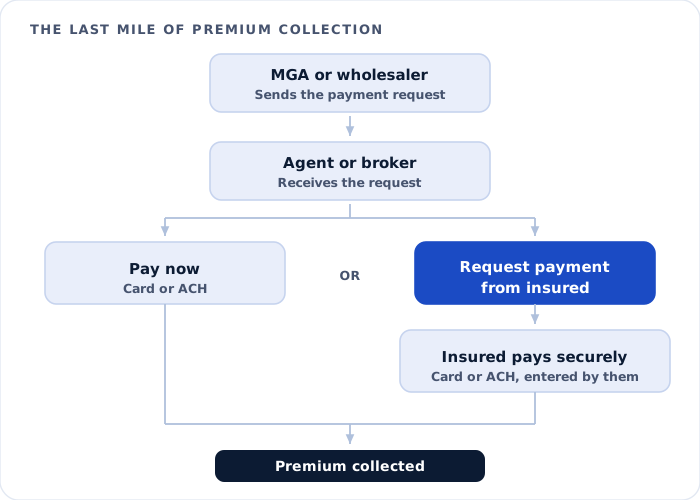
Premium collection can slow down after the request leaves your office, while the agent waits on the insured.
You send the payment request to the agent. The agent can pay now, or request payment from the insured. CoverPay then sends that specific payment request on to the insured, who enters their own card or ACH information and pays securely. The premium is collected and you see it settle.
No CoverPay subscription or separate payment setup for your agents. They use it through the payment experience you already send them.
No card details by phone
The insured enters their own payment details, so the agent does not need to handle them.
No waiting on a check
The insured can pay electronically instead of sending a check.
No fronting the premium
The agent does not need to pay you first and collect from the insured afterwards.
No separate agent signup
No CoverPay subscription and no separate payment setup.
The insured receives a secure CoverPay payment page tied to the request from their insurance agency. CoverPay processes the payment for the premium.
How CoverPay Handles Premium Collection
CoverPay manages premium collection end to end. Works with payment orchestration, failed payment recovery, and finance integrations
Payments stay connected to insurance workflows and financial records.
Payment Methods
Premium Financing
- Enables upfront payment through third-party lenders
- Reduces collection risk
Integration With Policy Systems
Premium collection must align with policy lifecycle.
CoverPay integrates with:
This ensures payments are tied to policy issuance, endorsements, and cancellations.
Installment Billing Integration
Premium collection is tightly connected to installment billing.
Handling Failed Payments
Premium collection must include failure handling.
Compliance Built Into Collection
Premium collection must follow regulatory rules.
CoverPay gives you controls for:
This keeps payment controls consistent without manual tracking.
Allocation and Reconciliation
Collected premium must be allocated correctly.
Agency Bill and Direct Bill Support
Premium collection varies by billing structure.
Agency Bill
- Full collection responsibility
Direct Bill
- Commission tracking and integration